
SureCare - Connected care operations
A role-aware child support platform that records care once and reuses it safely across shifts, safeguarding, operations, and finance.
TIMELINE
2026
TEAM
Independent product exploration
IMPACT
Connected daily care, shifts, safeguarding, learning, payroll, and operations in one role-aware system
Role & Impact
- Connected daily care, shifts, safeguarding, learning, payroll, and operations in one role-aware system
- Designed structured records that can be reused without exposing information beyond each role's responsibility
- Mapped clock-in, off-site duty, handover, incident, medication, and finance states into complete workflows
- Built a functional pre-production demo with synthetic data to test the product model
Product walkthrough
The connected experience in motion
One care event, many responsible decisions
Care work produces information continuously, but that information is often split across notes, forms, messages, rota tools, and finance systems. SureCare explores a shared operating layer where a care event is recorded once, then reused only where it is relevant and authorized.
The connected care loop
From fragmented notes to a shared record model
Discovery & Stakeholder Alignment
The central design problem was not adding more forms. It was preserving the meaning of a care event as it moves between the staff member who records it, the manager who reviews it, and the operational teams that may need a limited downstream view.
Research & Validation
I mapped the complete care loop around people, shifts, records, incidents, medication, learning, and operational follow-through. The resulting structure treats access as contextual: each role sees the evidence needed to act, while safeguarding and health information remain deliberately constrained.
Framework Development
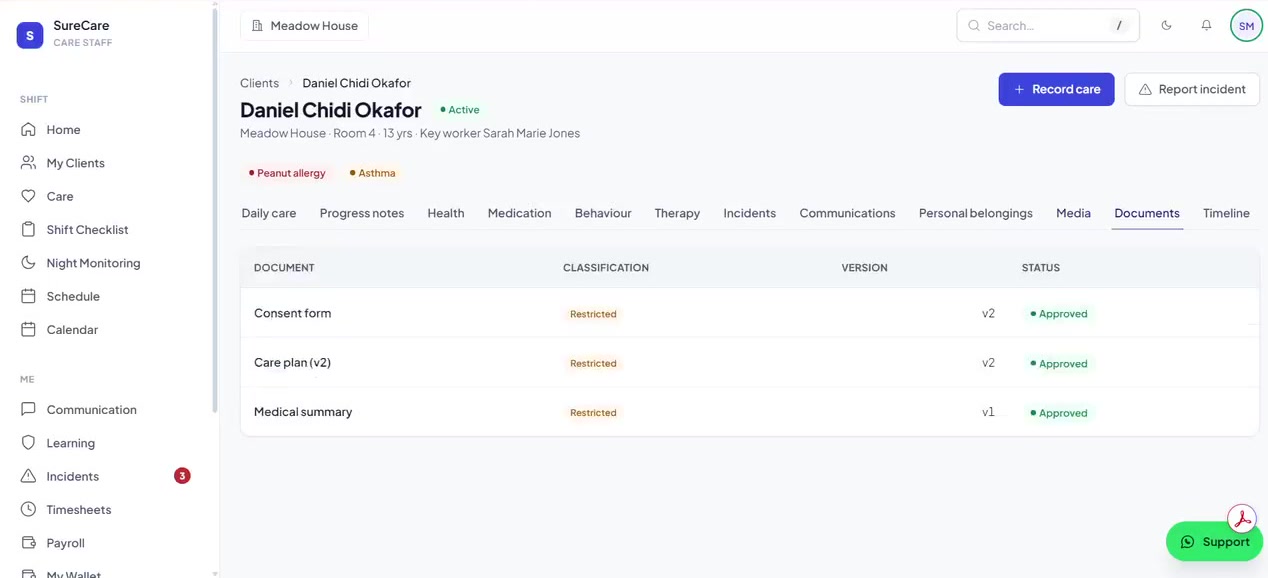
SureCare is organized around role-specific workspaces for care staff, managers, administrators, external providers, and finance teams. Shared entities such as a person, shift, incident, task, or timesheet keep the system connected without forcing every role into the same interface.
Different responsibilities, one connected system
Favourite Screens (Highlights)
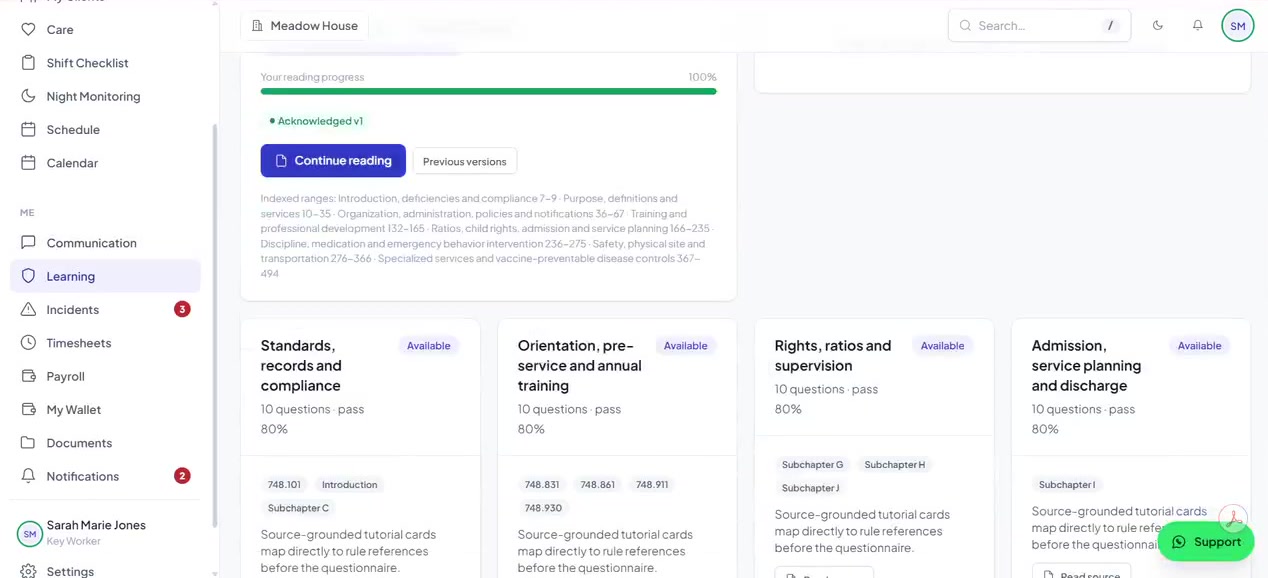
- •Care staff workspace with active-shift context and immediate actions
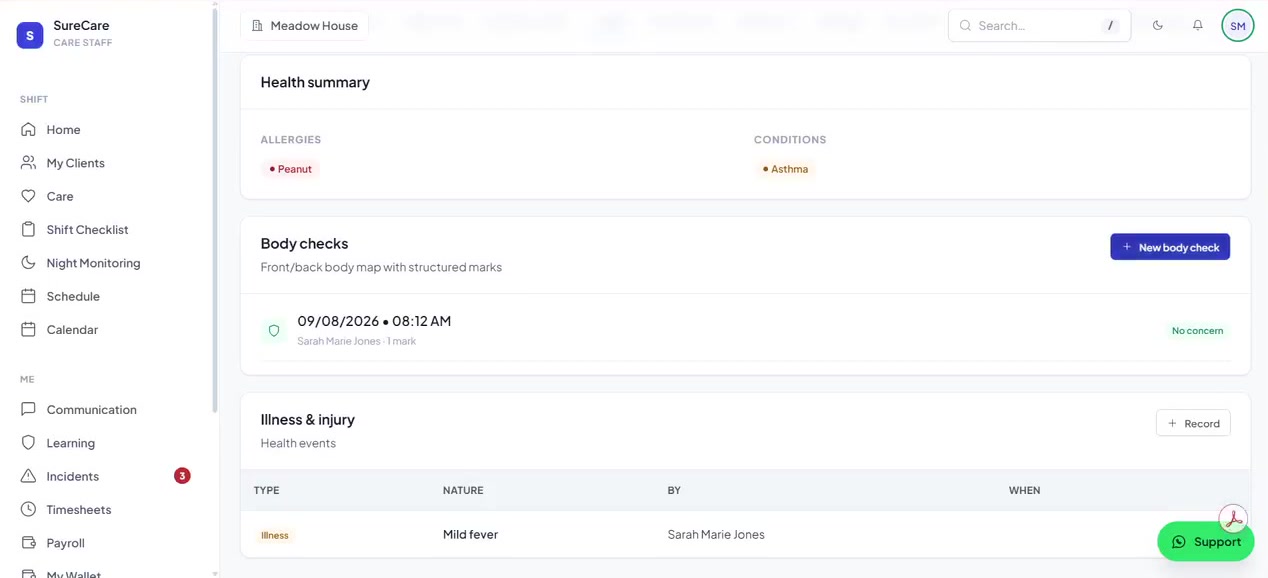
- •Structured health, body-check, and illness records
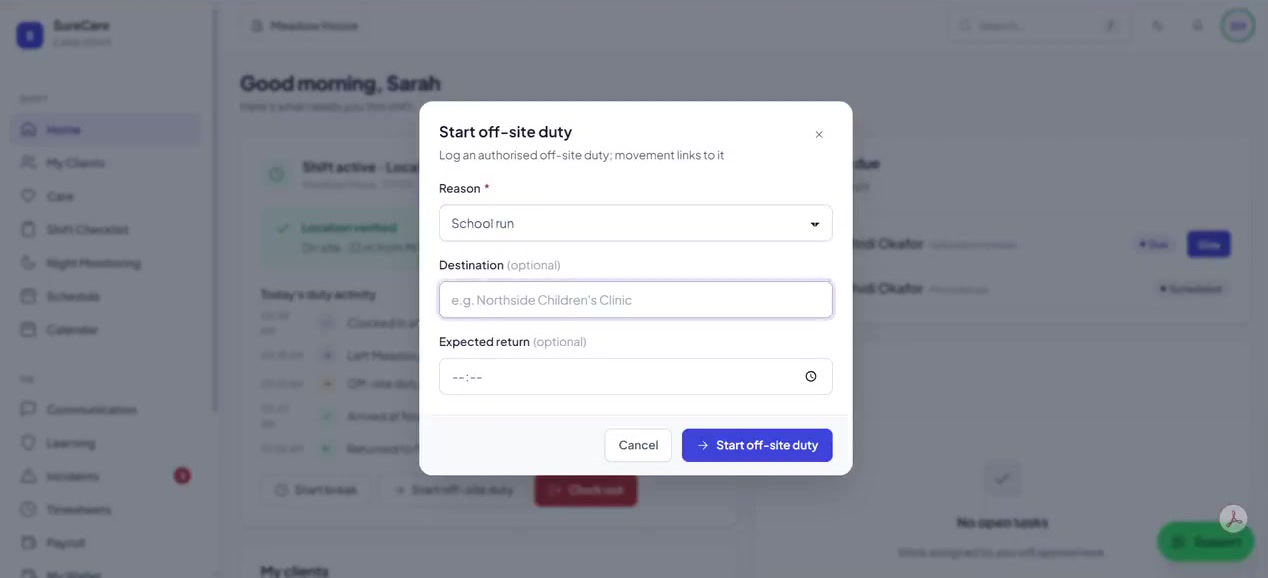
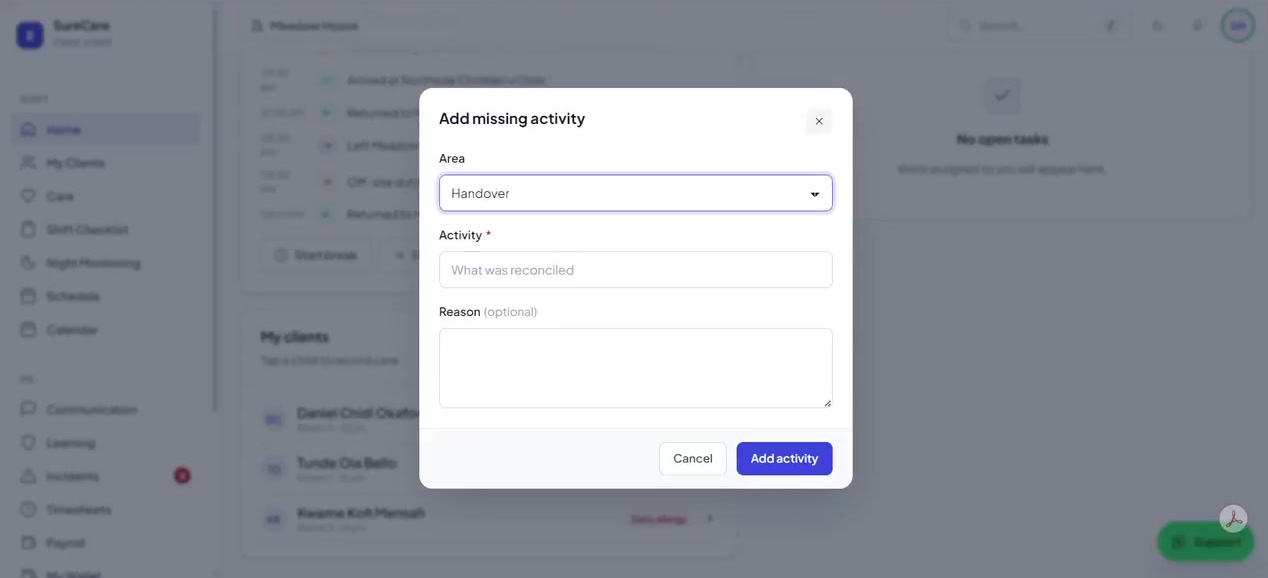
- •Off-site duty and handover flows that preserve responsibility
- •Incident review, medication, operational, and finance workspaces
Care staff
Shift context, assigned people, daily care, medication, health records, and handover are organized around the staff member's immediate responsibility.
Safeguarding and operations
Incident governance, learning, scheduling, inventory, and procurement reuse the right source records while keeping sensitive detail constrained.
Time and finance
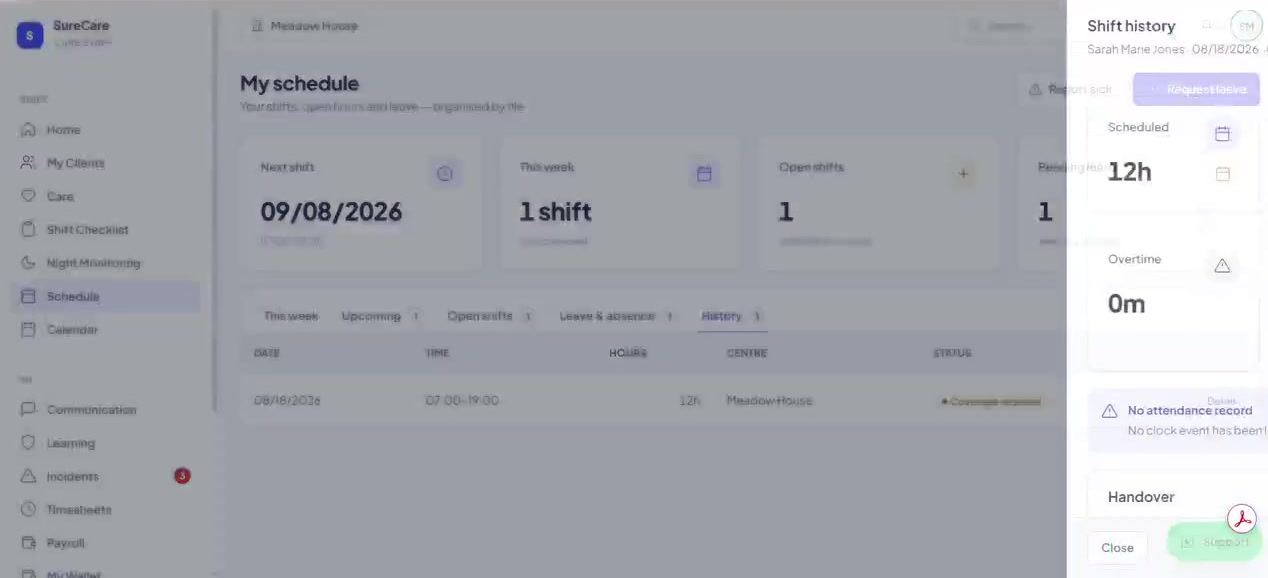
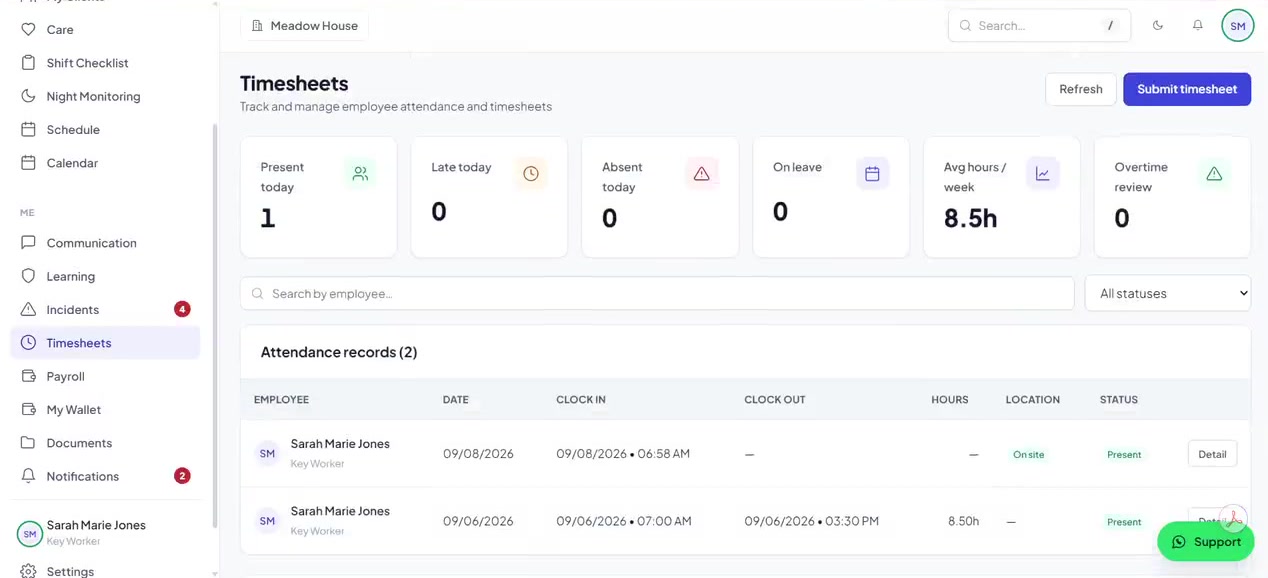
Approved shifts and operational activity can flow into timesheets, payroll, and finance without asking staff to recreate the same evidence.
Safeguarding, access, and prototype boundaries
The prototype uses synthetic data and demonstrates role-aware access, audit trails, and safeguarding boundaries. It is a functional pre-production exploration, not a production care-record system or a claim of regulatory certification.
What production readiness requires
The next phase would validate the workflows with care staff and safeguarding leads, then replace browser-side demo services with production authentication, secure persistence, offline capture, and verified integrations.
Insights & Lessons
What Worked:
- •Designing around a complete shift made disconnected features feel like one operational loop
- •Role-specific views preserved clarity while still sharing a common record model
- •Contextual access made privacy a visible product behavior instead of a hidden policy
What I Learned:
- •Care software must preserve human context as rigorously as it preserves data
- •A handover is both communication and accountability
- •Operational reuse is valuable only when permission boundaries remain explicit
If I Could Do It Again:
I would involve frontline staff, safeguarding leads, and finance administrators earlier in scenario testing, especially around exceptions and disputed records.